Savannah Kittens for Sale
Tall, athletic and strikingly spotted, the Savannah cat attracts attention wherever it goes. Yet its unusual ancestry, demanding activity needs and potential legal restrictions mean that buying a Savannah kitten in the UK calls for considerably more research than choosing an ordinary domestic cat.
Explore available cat listings at PetSalesUK.com while making sure the kitten, its breeder and its generation are suitable for your circumstances.
Savannah Kittens for Sale
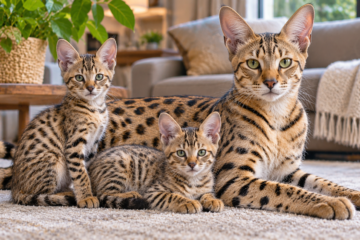
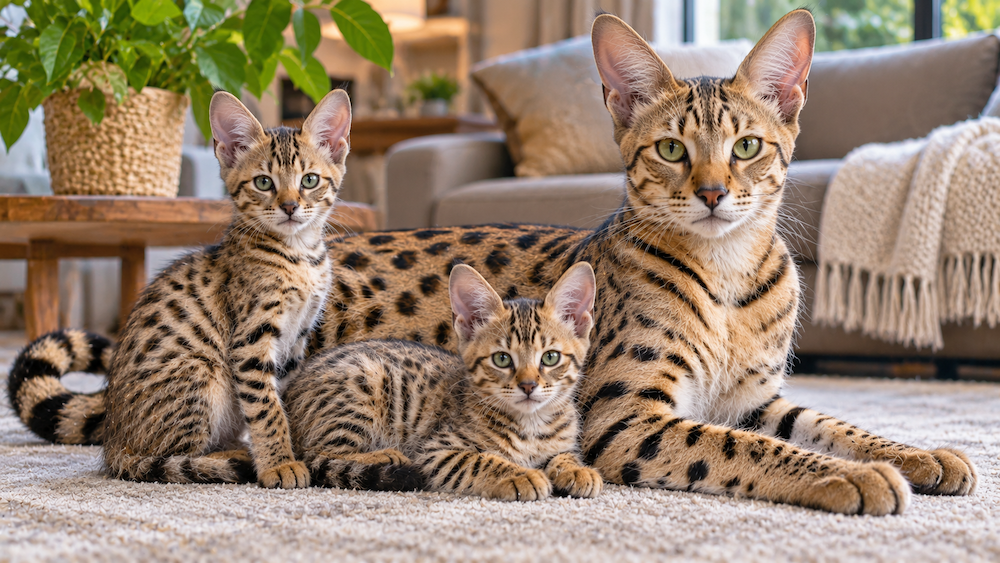
The Savannah was developed by crossing domestic cats with the African serval, a wild feline known for its exceptionally long legs and large ears. Subsequent generations are bred with domestic cats, producing a wide range of sizes, appearances and temperaments. The breed’s signature look includes a lean body, long neck, bold spotting and a lively, alert expression.
Savannahs are not simply large, spotted house cats. Many are energetic problem-solvers that climb, leap, investigate cupboards and demand daily interaction. Their suitability depends heavily on the individual cat, its generation, socialisation and the owner’s experience.
What Do F1, F2, F3 and Later Generations Mean?
An F1 Savannah has a serval parent; an F2 has a serval grandparent, and later generations are progressively further removed from the original cross. Generation labels are useful but do not by themselves prove a cat’s legal status, ancestry, temperament or suitability. Ask for documented parentage and registry records, and never accept an unsupported generation claim as proof of legality.
Some later-generation Savannahs are more similar to domestic cats in their management needs, although they can still be very active and demanding. The exact breeding history and local legal position matter more than an attractive advertisement.
What Should a Healthy Savannah Kitten Look Like?
A healthy kitten should be bright-eyed, curious, steady on its feet and comfortable breathing. Its coat should be clean, with no obvious bald patches or parasites. Kittens may be cautious with strangers, but persistent panic, marked lethargy, diarrhoea or visible illness are reasons to delay a purchase and seek veterinary advice.

Savannah Kittens for Sale Near Me
Searches for Savannah kittens often focus on London, Manchester, Birmingham, Bristol, Leeds, Edinburgh and surrounding areas. Genuine, carefully bred litters may be uncommon, so be prepared to travel to a responsible breeder or wait for a suitable kitten rather than relying on the nearest listing.
Are Savannah Cats Legal to Own in the UK?
This question must be answered before any deposit is paid. Savannahs with recent serval ancestry can fall within dangerous wild animal licensing rules, and requirements may depend on the cat’s generation and the law applicable in England, Scotland, Wales or Northern Ireland. Legal treatment can also differ between owning, breeding, selling and importing an animal.
Contact your local council’s licensing team and, where necessary, the relevant devolved authority to confirm the rules for the specific cat and its documented ancestry. Do not assume that an F-number, pedigree certificate or a seller’s assurance removes the need for a licence. A licence, if required, may involve enclosure, welfare, insurance and inspection conditions. Never arrange a purchase or transport until the position is confirmed in writing.
Choosing a Responsible Savannah Breeder
A trustworthy breeder should explain the kitten’s lineage, provide verifiable documents, discuss the realistic adult size and temperament, and welcome questions about secure housing. They should show where the kittens were raised and how they have been handled. Responsible breeders prioritise welfare over marketing claims such as “rare”, “giant” or “wild-looking”.
Ask about the parents’ veterinary history, screening for inherited heart and other conditions where appropriate, parasite treatment, vaccination and microchipping plans. In England, a kitten sold as a pet must generally be at least eight weeks old; licensing requirements may also apply to commercial sellers. Rules differ across the UK, so check the seller’s jurisdiction.
Questions to Ask Before Buying
- What is the kitten’s exact generation, and can you show verified parentage?
- Have you confirmed the legal position with the appropriate UK licensing authority?
- Can I see the kitten in its usual home environment and meet its mother where possible?
- What socialisation, enrichment and handling has the kitten experienced?
- What veterinary checks and pedigree or registration documents will I receive?
- What secure indoor and outdoor accommodation will the adult cat need?
- What support or return policy is available if the placement does not work out?
Does a Savannah Cat Make a Good Family Pet?
Savannahs can form strong bonds with their families, but they are rarely a low-effort choice. Their speed, strength and enthusiasm for play may overwhelm very young children or quieter pets. A family that enjoys training, interactive games and structured routines may find a well-socialised, suitable later-generation Savannah rewarding.
Children should never chase, restrain or rough-handle a cat. Provide high escape routes and private resting areas, supervise play and use toys rather than hands. Introductions to other pets must be gradual; some Savannahs have a strong chase response, so small mammals and birds require secure, separate accommodation.
Are Savannah Cats Suitable for First-Time Owners?
Usually they are better suited to experienced cat owners with time, space and the resources to create a stimulating environment. A prospective first-time owner should carefully assess the cat’s generation, individual temperament and management demands, and seek specialist advice before committing.
Savannah Cat Temperament and Personality
Many Savannahs are inquisitive, confident and highly interactive. They may follow people around the house, retrieve toys, learn to open doors or explore running water. Some enjoy close physical affection, while others prefer to remain nearby without being held. Neither behaviour should be guaranteed from the breed label alone.
They may vocalise to demand attention, especially when bored. Because their intelligence makes them adept at discovering weaknesses in household routines, they need consistent boundaries and safe outlets for exploration. Leaving an active Savannah alone for long periods without enrichment can contribute to frustration and destructive behaviour.
Savannah Cat Exercise and Activity Requirements
Plan for several substantial interactive play sessions every day, with additional independent enrichment. Wand toys, puzzle feeders, sturdy climbing trees, tunnels and scent-based games help meet both physical and mental needs. Rotate activities regularly rather than leaving the same toys out indefinitely.
Indoor Living and Secure Outdoor Access
A well-designed indoor environment can work, provided it includes vertical space and room for vigorous play. A professionally secured catio or escape-proof garden enclosure can provide extra stimulation. Ordinary garden fencing is not reliable containment for an athletic Savannah, and free roaming carries risks for the cat, wildlife and neighbours.
Check doors, windows, screens and balconies. Some cats are skilled at opening latches, so secure closures and household routines are essential. Any enclosure must comply with the applicable licensing conditions if the cat is regulated.
Can Savannah Cats Walk on a Harness?
Some learn to enjoy a properly fitted harness through gradual, reward-based training. Begin indoors and proceed only when the cat is comfortable; never force the experience. Outdoor walks require close supervision, secure equipment and awareness of dogs, traffic and sudden noises.
Training a Savannah Cat
Reward-based training is particularly valuable for an intelligent, active breed. Use small food rewards, toys or clicker training to teach recall, carrier entry, handling and cooperative veterinary care. Short sessions tend to work better than long, repetitive drills.
Litter Habits and Household Manners
Provide generously sized litter trays in quiet locations, clean them frequently and avoid abrupt changes in litter. Reward scratching-post use and give alternatives to climbing on unsafe furniture. Punishment can damage trust and increase anxiety; management and consistent reinforcement are more effective.
Savannah Cat Grooming and Coat Care
The Savannah’s short to medium coat is generally easier to maintain than that of a long-haired cat. Weekly brushing usually removes loose hair and offers a chance to check the skin. Shedding varies between individuals. Trim nails as needed, inspect ears and introduce gentle toothbrushing using cat-safe toothpaste.
Savannahs are not reliably hypoallergenic. People sensitive to cats may react to allergens in saliva and skin secretions regardless of coat length or shedding level.
Savannah Cat Health and Lifespan
Lifespan varies with ancestry, genetics, husbandry and veterinary care; many domestic-type Savannahs can live into their teens. No breeder can guarantee a kitten will remain free of disease. Prioritise transparent health histories and a veterinarian familiar with the cat’s background.
Heart Health and Inherited Conditions
Hypertrophic cardiomyopathy (HCM) is a concern in cats generally and is worth discussing with breeders of Savannahs. Ask what cardiac screening is undertaken, whether the parents have been examined by a veterinary cardiologist and whether any close relatives have had heart disease. Screening reduces uncertainty but does not guarantee lifetime health.
Diet, Weight and Veterinary Care
Feed a complete, balanced diet appropriate to the cat’s life stage; unusual ancestry does not automatically justify a raw or unbalanced meat-only diet. Discuss any special nutritional claims with your vet. Monitor weight, hydration, dental health and behaviour, and maintain routine vaccinations and parasite prevention as advised locally.
For cats with recent wild ancestry, confirm that your veterinary practice can provide appropriate care and that transport and handling arrangements are safe and lawful. Some specialist services may be needed.
Interesting Facts About the Savannah Cat
- The breed takes its name from the first known Savannah kitten, born in the 1980s.
- Its spotted appearance reflects serval ancestry, but individual markings and size vary considerably.
- Some Savannahs show an unusual fascination with water and interactive puzzle toys.
- Long legs and powerful jumping ability make secure vertical space especially important.
- Generation labels describe ancestry; they are not a substitute for legal advice or proof of responsible breeding.
Savannah Cat Breed Overview
These are broad tendencies rather than promises. Ratings may vary substantially by generation, upbringing and individual personality.
Breed characteristic | Typical rating |
Affection with family | ★★★★☆ Often strong |
Energy level | ★★★★★ Very high |
Intelligence | ★★★★★ Very high |
Training potential | ★★★★★ Excellent with rewards |
Need for enrichment | ★★★★★ Very high |
Grooming requirements | ★★☆☆☆ Usually modest |
Shedding | ★★★☆☆ Moderate |
Suitability for small flats | ★★☆☆☆ Needs extensive enrichment |
Suitability with young children | ★★☆☆☆ Individual assessment essential |
Compatibility with small pets | ★☆☆☆☆ High caution |
First-time owner suitability | ★☆☆☆☆ Usually challenging |
Secure outdoor access needs | ★★★★★ Strongly recommended |
Thinking About Buying a Savannah Cat?
A Savannah can be a remarkable companion for an experienced, committed owner, but its welfare needs and possible legal controls must come before appearance or rarity. Decide whether you can provide secure accommodation, consistent enrichment, veterinary care and the attention an active cat needs throughout its life.
Before paying a deposit, verify the kitten’s generation and documentation, obtain clear advice from the appropriate licensing authority, meet the breeder and budget realistically for ongoing care. If the requirements feel uncertain or excessive, a lively domestic breed may be a better match.
Discover cat listings at PetSalesUK.com and contact sellers to ask detailed questions before arranging a visit.